Vietnamese water puppet shows (múa rối nước) are one of Vietnam’s most distinctive traditional art forms. Performed on water rather than a conventional stage, this centuries-old tradition blends storytelling, craftsmanship, live music, and rural symbolism into a cultural experience found nowhere else in the world.
At first glance, a water puppet show feels simple – wooden figures moving across a pool, accompanied by live traditional music. Yet behind this modest setting lies a tradition shaped by rural life and seasonal change. Originating in northern Vietnam, Vietnamese water puppet shows bring together craftsmanship, music, and storytelling on water, preserving cultural practices passed down through village communities.
A Short History of Vietnamese Water Puppetry
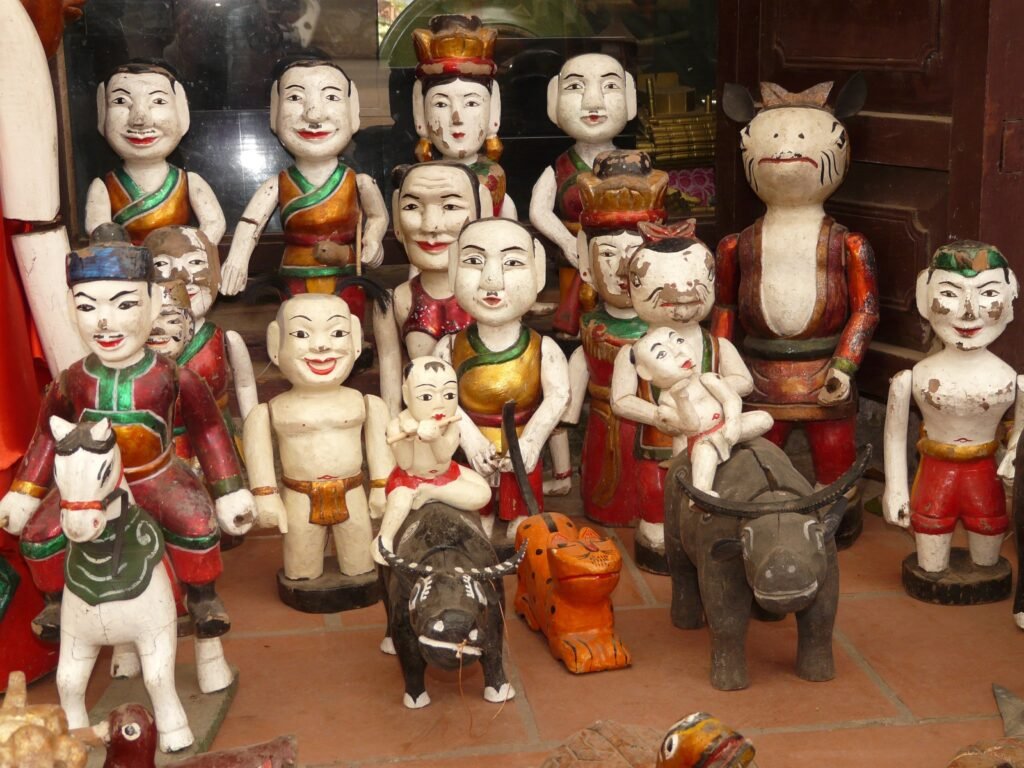
Vietnamese water puppetry (múa rối nước) originated in northern Vietnam, particularly in the Red River Delta, an area long shaped by wet-rice farming and seasonal flooding. Historical records and oral traditions suggest that the art form emerged around the 11th century, during the Ly Dynasty.
In villages shaped by seasonal floods, people adapted their environment for both daily work and communal life. After harvests or during the rainy months, ponds and flooded fields became meeting places, where early water puppet performance (múa rối nước) gradually emerged.
Unlike courtly performance arts reserved for elites, water puppetry belonged to farming communities. Performances were staged during festivals, harvest celebrations, and religious events, reinforcing social bonds and shared identity within the village.
A Traditional Water Puppet Performance
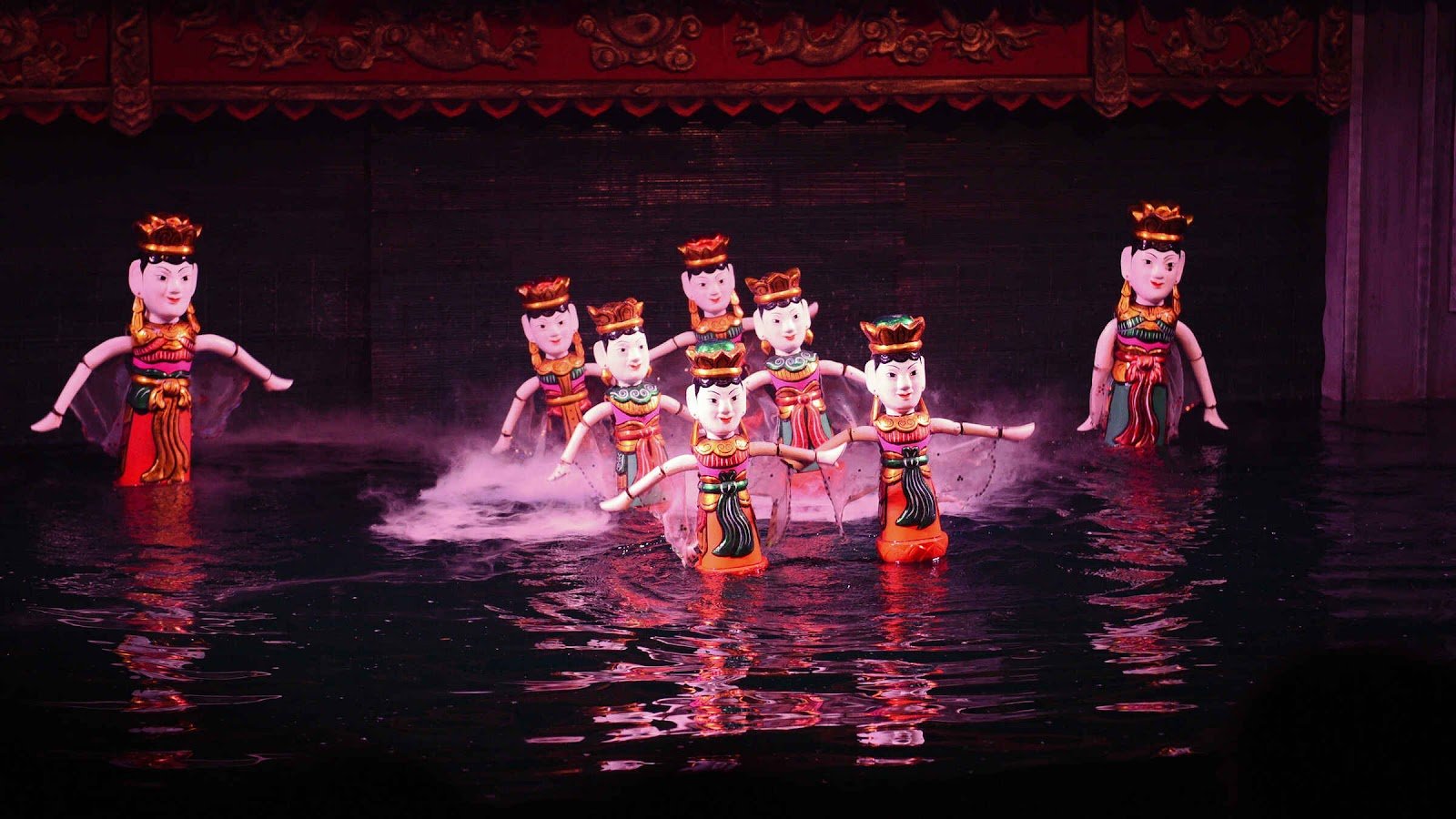
Water puppetry (múa rối nước) is a live performance staged on a shallow pool of water, where wooden puppets glide across the surface with surprising fluidity. Hidden behind a bamboo screen, puppeteers control the figures using long rods and strings submerged beneath the water. Traditionally carved from fig wood and coated with layers of lacquer, the puppets are both durable and visually expressive, designed to withstand constant contact with water.
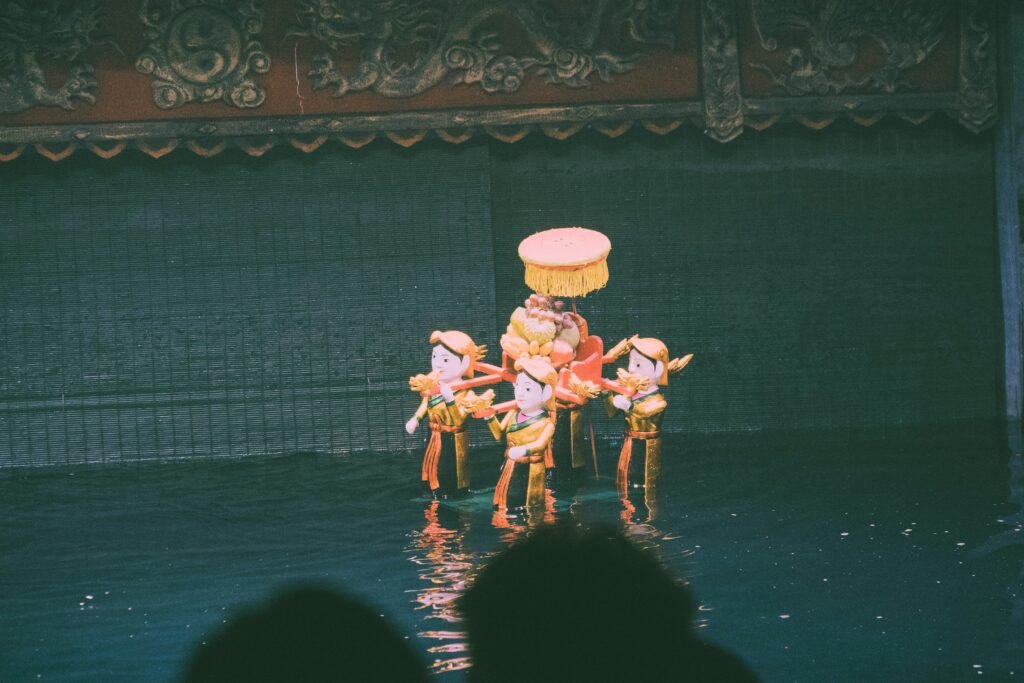
One of the most recognizable characters is Chú Tễu, the smiling, mischievous village jester. Acting as narrator and guide, Chú Tễu introduces scenes, jokes with the audience, and bridges transitions between acts. His humour balances technical mastery with accessibility, making the performance engaging even for first-time viewers.
“Làng mình mở hội hay chưa?
Đi xem múa rối ao chùa canh đêm
Tễu cười toét miệng ngoi lên
Trăng rằm rơi tõm in nền nước xanh”
(Hoàng Anh Tuấn)
Source: Dauhomemade
The Symbolism of Water in Water Puppetry
In Vietnamese water puppetry, water is not simply a setting but an essential part of the performance itself. On a practical level, the shallow pool conceals the rods and strings used to control the puppets, allowing movements to appear fluid and uninterrupted. Reflections and ripples add a sense of motion, making simple gestures feel lively and continuous.
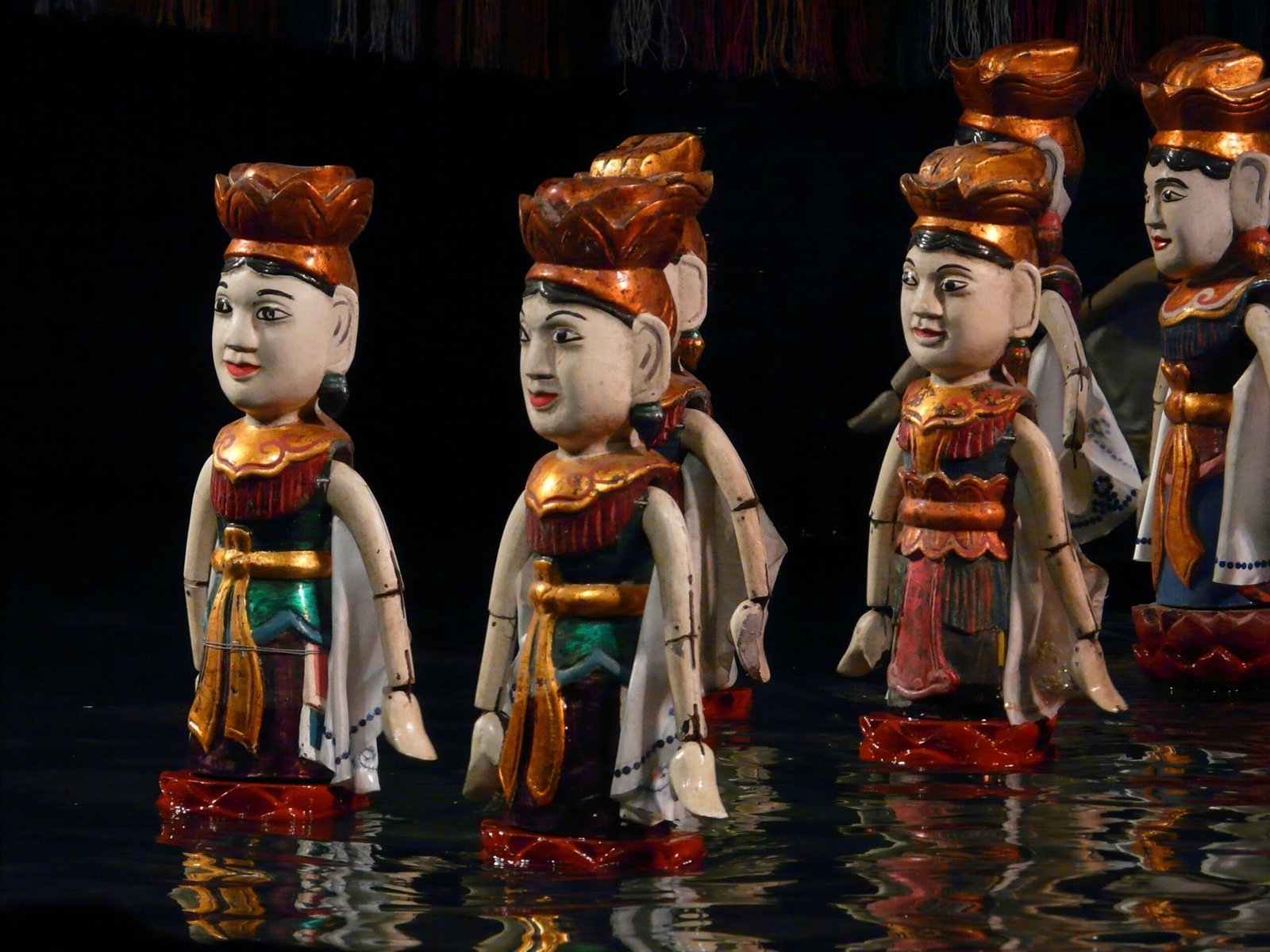
Beyond technique, water carries cultural meaning in Vietnam, particularly in agricultural regions shaped by rivers and monsoon cycles. For centuries, water has governed planting, harvests, and village life. Performing directly on water reflects a worldview shaped by adaptation rather than control, where people live in rhythm with nature instead of attempting to dominate it.
Sound, Rhythm, and the Live Experience
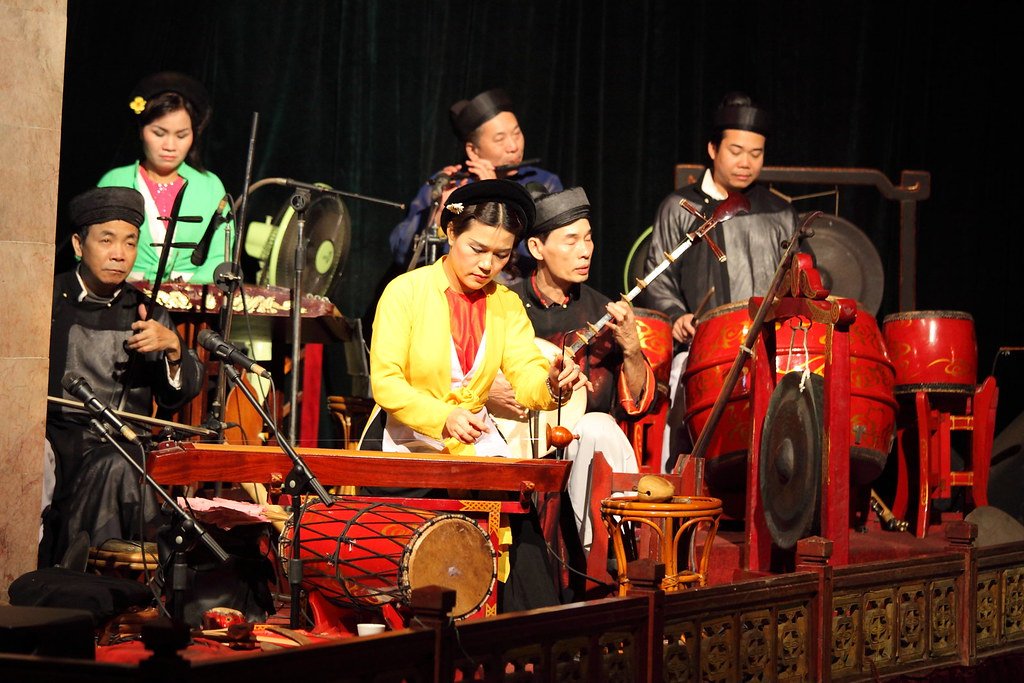
Music is inseparable from the water puppet show. Performed live, it guides the rhythm of each scene and responds directly to the puppets’ movements. Drums mark moments of action, gongs and flutes add atmosphere, and string instruments shape the emotional tone of the performance.
Vocal narration plays an equally important role, providing context, humour, and transitions between scenes. Because musicians and puppeteers interact in real time, no two performances are exactly the same. Small variations in timing or emphasis keep the tradition dynamic, reinforcing the sense that water puppetry is a living performance rather than a fixed script.
From Village Tradition to Contemporary Stage
For travellers interested in cultural heritage, water puppet shows (Múa rối nước) offer an experience that is both approachable and meaningful. The performances rely less on language and more on movement, music, and visual rhythm. This allows visitors to engage intuitively while still gaining insight into Vietnam’s social history and rural traditions.
Rather than presenting culture as something formal or distant, water puppetry reflects everyday life shaped by shared labour, seasonal cycles, and community gatherings. It offers a way to understand Vietnam beyond landmarks and itineraries, through an art form that continues to adapt to modern settings while remaining firmly rooted in its village origins.
Where to Watch Vietnamese Water Puppet Shows
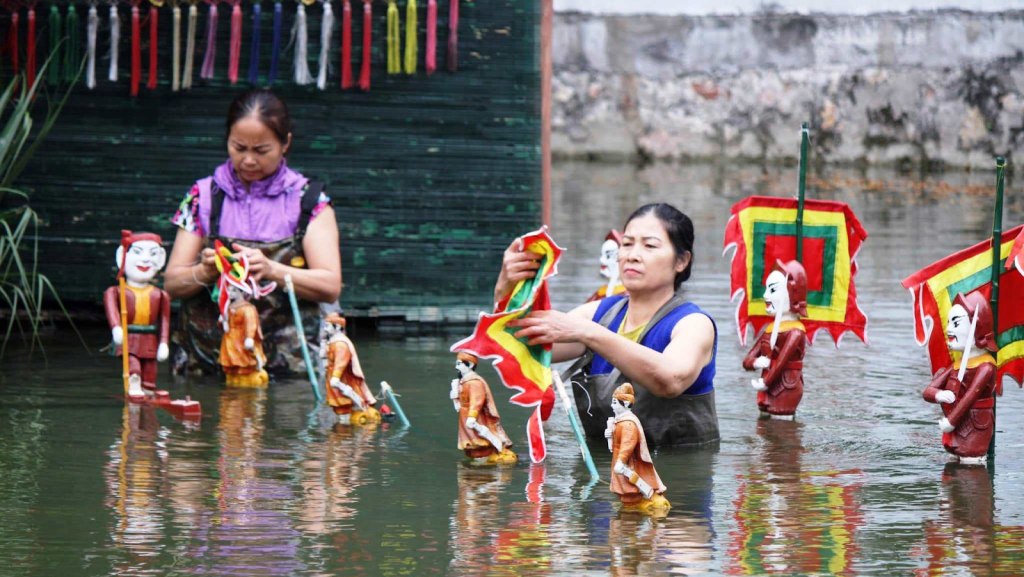
For those seeking a deeper understanding of Vietnamese water puppetry, Đào Thục Village, located on the outskirts of Hanoi, offers a rare glimpse into the craft behind the performance. The village is home to one of the few remaining water puppet workshops in Vietnam, where visitors can learn how the puppets are carved, prepared, and brought to life on water. An outdoor stage within the village continues a tradition that has been sustained for more than 300 years, keeping water puppetry closely connected to its rural roots.
Below are some of the best places to enjoy a show across the country:
- Thăng Long Water Puppet Theatre – 57B Đinh Tiên Hoàng St., Hoàn Kiếm District, Hanoi
- Vietnam Puppet Theatre – 361 Trường Chinh St., Thanh Xuân District, Hanoi
- Hội An Theatre – 548 Hai Bà Trưng St., Hội An
- Huế Water Puppet Theatre – 8 Lê Lợi St., Vĩnh Ninh District, Huế
- Golden Dragon Water Puppet Theatre – 55B Nguyễn Thị Minh Khai St., District 1, HCMC
- Museum of Vietnamese History (outdoor) – 2 Nguyễn Bỉnh Khiêm St., District 1, HCMC
To explore more traditional experiences, see our related articles on must-try Vietnamese foods and Vietnamese cultural workshops.